
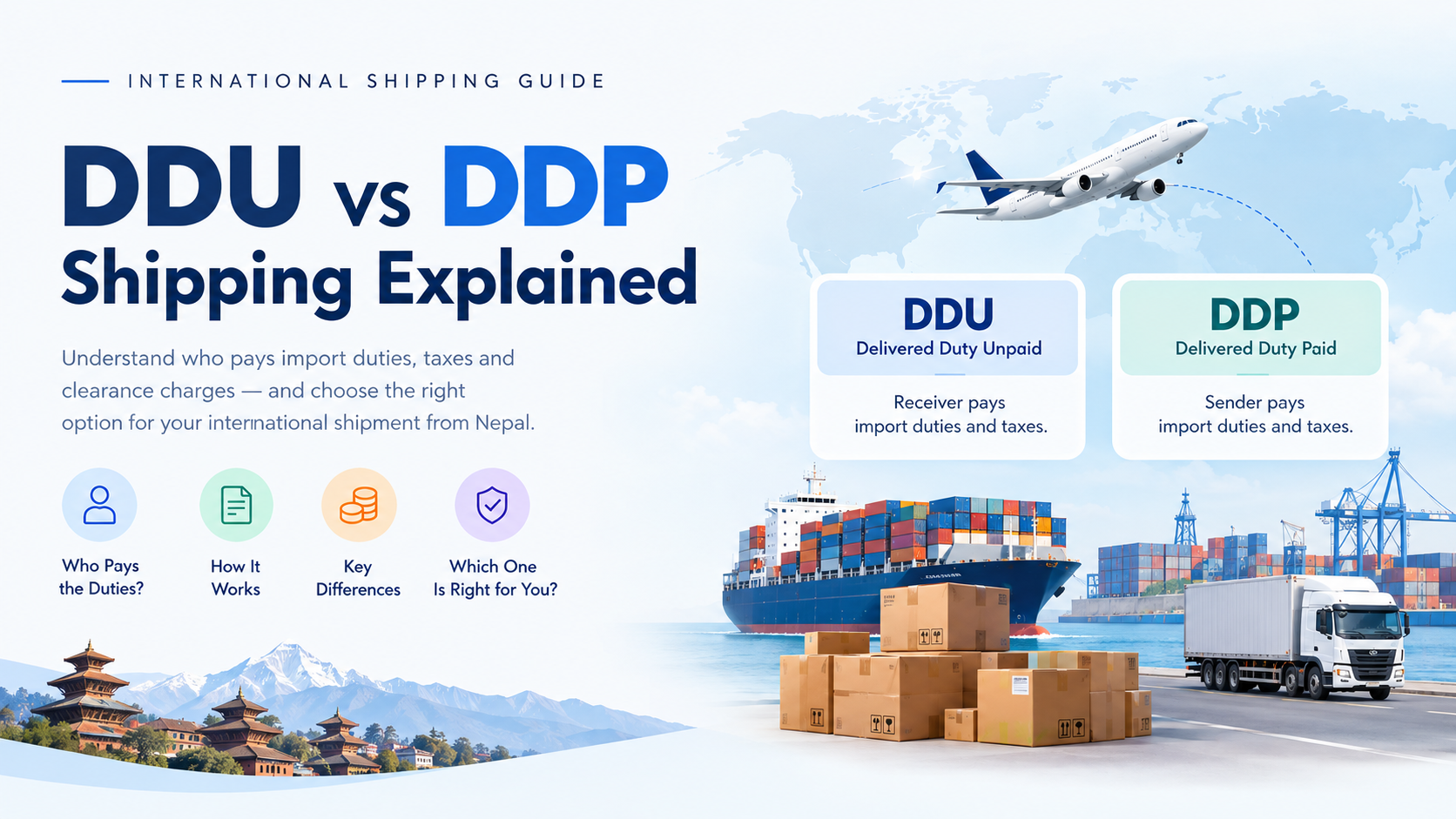
When sending a parcel or commercial shipment internationally, understanding who is responsible for customs duties, import taxes, and clearance charges is extremely important.
Two shipping terms you may come across are DDU (Delivered Duty Unpaid) and DDP (Delivered Duty Paid). These terms determine whether the sender or receiver is responsible for import duties and taxes when a shipment reaches its destination country.
For individuals and businesses shipping from Nepal, knowing the difference between DDU and DDP shipping can help prevent unexpected charges, customs delays, and delivery problems.
In this guide, Hulak Express explains DDU vs DDP shipping in simple terms and helps you understand which option may be more suitable for your international shipment.
What Does DDU Mean in Shipping?
DDU stands for Delivered Duty Unpaid.
Under a DDU arrangement, the sender is generally responsible for transporting the shipment to the agreed destination, while the receiver is responsible for applicable import duties, taxes, and other destination-country charges.
In modern Incoterms terminology, the concept commonly associated with DDU is DAP (Delivered at Place). DDU itself is not one of the current Incoterms 2020 rules.
How DDU Shipping Works
A typical DDU shipment works like this:
- The sender prepares and hands over the parcel to the courier.
- The courier transports the shipment from Nepal to the destination country.
- The shipment arrives at destination customs.
- Customs assesses applicable duties and taxes.
- The receiver pays the required import charges.
- After customs requirements are completed, the shipment continues toward final delivery.
The exact process can vary depending on the destination country, shipment type, declared value, commodity, and local customs regulations.
Advantages of DDU Shipping
DDU or DAP can be useful when:
- The receiver is comfortable paying import charges.
- The sender does not want to prepay destination duties and taxes.
- The shipment is being sent between businesses that already have agreed payment arrangements.
- Import charges are difficult to estimate before customs assessment.
Disadvantages of DDU Shipping
The main disadvantage is that the receiver may have to pay additional charges before the parcel can be delivered.
These may include:
- Import duty
- VAT or GST
- Customs-related charges
- Brokerage or clearance fees
- Other destination-country charges
This can sometimes create an unexpected cost for the recipient.
What Does DDP Mean in Shipping?
DDP stands for Delivered Duty Paid.
Under DDP, the seller or shipping party takes responsibility for the shipment's transportation and the applicable import customs clearance, duties, and taxes, subject to the specific service arrangement.
DDP is one of the official Incoterms 2020 rules and places a high level of responsibility on the seller.
How DDP Shipping Works
With DDP shipping:
- The sender prepares the shipment and required documents.
- The courier transports the shipment internationally.
- Destination customs processes the shipment.
- Applicable duties and taxes are handled according to the DDP arrangement.
- The shipment proceeds toward the agreed destination.
- The receiver can receive the shipment without separately arranging payment of the import duties and taxes covered by the DDP arrangement.
However, the exact charges covered by a courier service should always be confirmed before shipping.
DDU vs DDP: What Is the Difference?
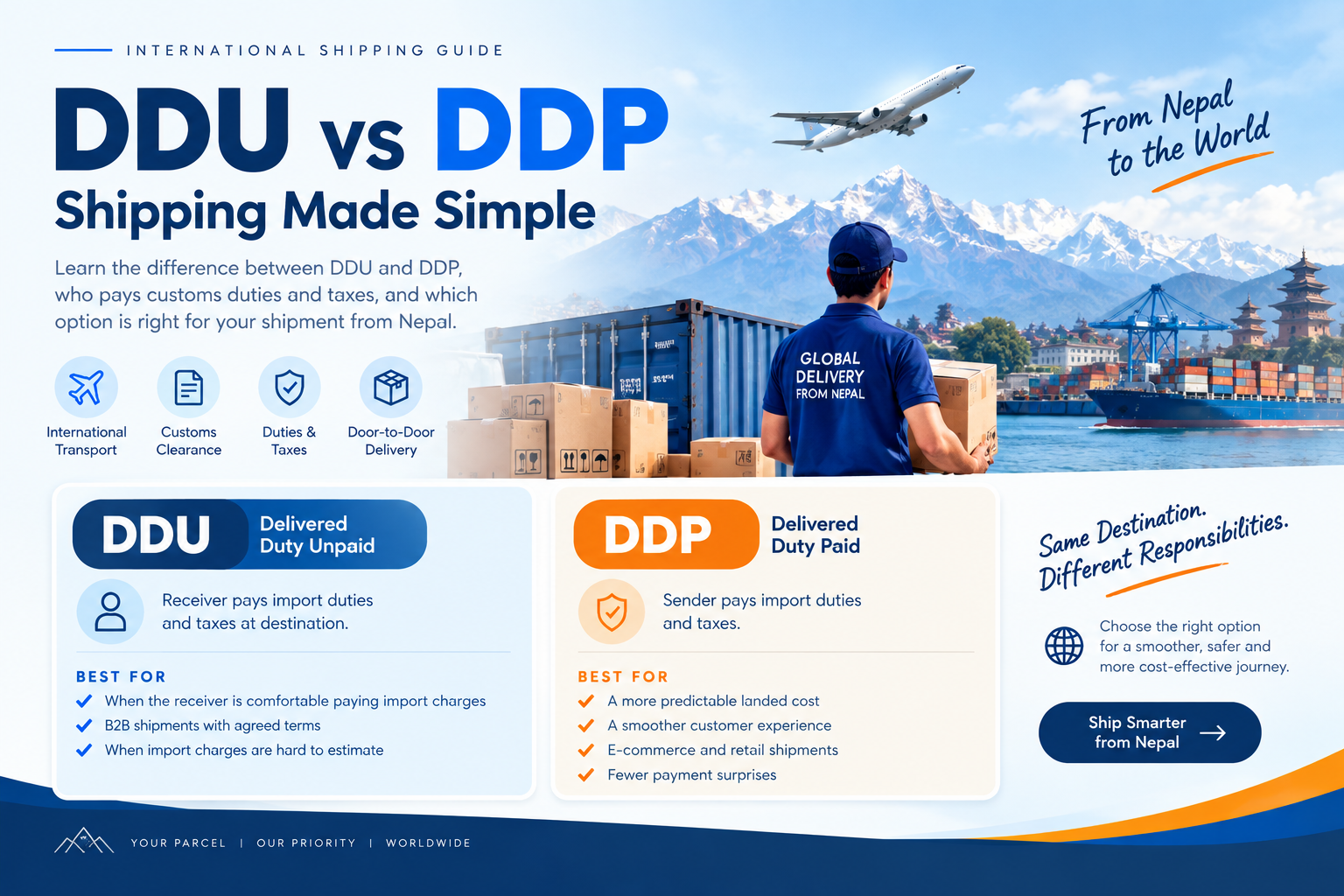
DDU/DAP: Receiver generally pays destination duties and taxes.
DDP: Sender generally takes responsibility for destination duties and taxes.
| Feature | DDU / DAP | DDP |
|---|---|---|
| International transportation | Sender | Sender |
| Export clearance | Sender | Sender |
| Import duties | Receiver | Sender |
| Import taxes | Receiver | Sender |
| Customs responsibility | Shared according to arrangement | Mainly sender |
| Unexpected destination charges | More likely for receiver | Less likely |
| Customer convenience | Moderate | High |
| Cost visibility | Lower upfront | Higher upfront |
| Suitable for e-commerce | Depends on market | Often convenient |
DDP generally provides greater cost visibility because applicable duties and taxes are handled as part of the seller's shipping arrangement, while under DDU the recipient may need to pay destination charges separately.
DDP vs DDU: Which Is Better?
There is no single answer for every shipment.
The right option depends on who is paying the import charges, the destination country's regulations, the type of goods, the shipment value, and the agreement between sender and receiver.
Choose DDP When:
DDP may be a better choice when you want:
- A more predictable landed cost
- A convenient customer experience
- Fewer payment surprises for the recipient
- Easier pricing for international e-commerce
- The seller to manage destination duties and taxes
For online businesses selling products internationally, DDP can make the purchasing experience simpler because customers are less likely to encounter unexpected import charges after placing an order.
Choose DDU / DAP When:
DDU or DAP may be appropriate when:
- The recipient is responsible for import costs.
- The buyer has experience handling customs.
- The sender wants to avoid prepaying destination duties.
- The shipment is part of an established B2B arrangement.
- Destination charges need to be assessed directly by local customs.
Are DDU and DDP Available in Every Country?
Not necessarily.
International shipping regulations vary from country to country. Customs procedures, tax systems, import restrictions, de minimis thresholds, documentation requirements, and available courier services can differ significantly.
Some international courier services offer different DDP and DDU options depending on the destination and shipment type.
Therefore, you should confirm the applicable shipping arrangement before sending your parcel rather than assuming that DDP or DDU works identically everywhere.
DDP Shipping from Nepal
For businesses and individuals shipping internationally from Nepal, DDP can be useful when the sender wants to provide a more straightforward delivery experience for the recipient.
For example, a Nepali business selling handicrafts to a customer overseas may want to know the total shipping and import cost before completing the transaction.
With an appropriate DDP arrangement, the seller can account for applicable shipping, duty, and tax costs when calculating the customer's total price.
However, customs duties and taxes depend on the destination country's regulations and the product being shipped.
DDU Shipping from Nepal
DDU/DAP arrangements can also be useful for shipments leaving Nepal when the receiver is prepared to handle import duties and taxes.
For example, someone sending personal belongings or a commercial shipment to a family member or business partner overseas may choose an arrangement where the recipient handles destination import charges.
What Determines Customs Duty and Tax?
Import duties and taxes are not determined simply by the shipping cost.
Customs authorities may consider factors such as:
- Type of product
- Declared value
- Country of origin
- Destination country
- HS code
- Quantity
- Shipping terms
- Intended use
- Import regulations
- Applicable VAT, GST, or sales tax
- Country-specific exemptions or thresholds
A correct commercial invoice and accurate product description can therefore be extremely important for international shipping.
Why Proper Customs Documentation Matters
Whether you ship under DDP or DDU/DAP, accurate documentation can help reduce customs problems.
Depending on the shipment, documents may include:
Commercial Invoice
A commercial invoice generally contains information such as:
- Sender details
- Receiver details
- Product description
- Quantity
- Unit value
- Total value
- Currency
- Country of origin
- HS code
- Reason for export
Packing List
A packing list can provide additional information about the contents, package count, weight, and dimensions.
Shipping or Air Waybill
The shipping document contains important information used to identify and process the shipment.
Additional Documents
Certain products may require additional permits, certificates, licenses, or supporting documents.
The requirements depend on the product and destination.
DDP vs DDU for E-Commerce Businesses
For Nepalese businesses selling products internationally, choosing the correct shipping arrangement can have a significant impact on the customer experience.
Imagine an online customer orders a Nepali product from overseas.
With DDU/DAP
The customer may pay:
and later potentially:
This can create an unexpected expense.
With DDP
The seller may calculate:
before completing the order.
This can make the final price more transparent.
For international e-commerce, this difference can influence customer satisfaction and repeat purchases.
Is DDP More Expensive Than DDU?
Not necessarily.
DDP can appear more expensive because duties and taxes are incorporated into the shipping arrangement or landed cost.
With DDU/DAP, the initial shipping cost may appear lower because destination duties and taxes are generally paid separately by the receiver.
Therefore, comparing only the courier charge can be misleading.
Product Cost + Shipping + Duties + Taxes + Clearance Charges + Other Applicable Fees
The final cost depends on the destination and shipment.
DDP vs DDU for Personal Parcels
If you are sending a personal parcel from Nepal to family or friends overseas, the choice can depend on the destination country's customs rules and the available service.
Personal shipments can include:
- Clothing
- Gifts
- Documents
- Handicrafts
- Permitted packaged food
- Personal belongings
- Household items
However, not every product is permitted in every destination country.
DDP vs DDU for Commercial Shipments
For commercial shipments, the choice becomes even more important because businesses need to calculate their actual landed cost.
DDP can be attractive when the seller wants to control the customer's final delivery experience.
DDU/DAP may be more appropriate when the buyer already has a customs broker or routinely handles import procedures.
For larger or regular shipments, businesses should agree on the applicable Incoterm and responsibilities before shipping.
Common Mistakes When Choosing DDP or DDU
1. Assuming DDP Means Every Charge Is Automatically Included
DDP defines specific seller responsibilities under the Incoterm, but individual courier services may have their own service conditions and exclusions.
Always confirm what is included in your quotation.
2. Using an Incorrect Product Description
A vague or inaccurate description can create customs questions and delays.
3. Declaring an Incorrect Value
The shipment should be declared accurately according to applicable customs requirements.
4. Ignoring Destination Regulations
Each country has its own import rules.
5. Comparing Only Shipping Prices
A low initial courier price may not mean a lower total cost if the recipient later has to pay duties and taxes.
How to Choose the Right Shipping Option
Before sending an international parcel from Nepal, ask these questions:
Who Will Pay Import Duties?
If the sender wants to cover them, DDP may be appropriate.
Who Will Handle Destination Customs?
Clarify this before shipment.
Does the Destination Support the Selected Arrangement?
Service availability can vary by country.
What Products Are Being Shipped?
Certain products may have special customs requirements.
What Is the Shipment Value?
The value can influence duties, taxes, and customs treatment.
Does the Receiver Want a Simple Delivery Experience?
If yes, a prepaid-duty arrangement may be preferable when available.
Ship Internationally from Nepal with Hulak Express
Choosing the right international shipping arrangement is only one part of a successful shipment.
You also need a reliable courier partner that can help with documentation, customs requirements, transportation, tracking, and delivery.
Hulak Express provides international courier and cargo services from Nepal to destinations around the world, including door-to-door delivery and customs clearance assistance.
Our international shipping solutions can help individuals and businesses send:
- Documents
- Personal parcels
- Gifts
- Clothing
- Handicrafts
- Permitted food products
- Commercial goods
- Business shipments
Whether you're sending a single parcel to family overseas or regularly exporting products from Nepal, understanding the applicable shipping terms can help you avoid unexpected costs and delays.
Frequently Asked Questions About DDU and DDP
What is DDU?
DDU means Delivered Duty Unpaid. It is an older shipping term commonly associated with what is now called DAP (Delivered at Place) under Incoterms 2020. The receiver generally handles destination import duties and taxes.
What is DDP?
DDP means Delivered Duty Paid. Under DDP, the seller takes responsibility for delivery to the named destination, including import clearance and applicable duties and taxes under the Incoterm.
Is DDU still an Incoterm?
No. DDU was replaced by DAP in the modern Incoterms framework. Many logistics companies and customers still use the term DDU informally.
Who pays customs duty under DDU?
Generally, the receiver or importer pays the applicable import duties and taxes.
Who pays customs duty under DDP?
Under DDP, the seller is responsible for applicable import duties and taxes as specified by the Incoterm and shipment arrangement.
Which is cheaper, DDU or DDP?
There is no universal answer. DDU may have a lower upfront shipping price, but the receiver may later pay duties and taxes. DDP may have a higher upfront price because applicable import costs are incorporated.
Can I send DDP shipments from Nepal?
DDP availability depends on the destination country, product, courier service, customs requirements, and shipment arrangement. Contact your courier provider before shipping to confirm the available option.
Does DDP guarantee that there will be no customs delay?
No. DDP does not eliminate customs procedures. Accurate documentation, product eligibility, customs regulations, and other factors can still affect clearance times.
Final Thoughts: DDU vs DDP
The difference between DDU and DDP mainly comes down to who is responsible for destination duties, taxes, and import-related costs.
DDU/DAP: The receiver generally pays destination duties and taxes.
DDP: The seller generally takes responsibility for applicable duties and taxes.
For businesses, DDP can provide greater price transparency and convenience for international customers. For certain personal and B2B shipments, DDU/DAP may be more suitable when the recipient is prepared to manage import charges.
Before shipping from Nepal, always check the destination country's customs requirements and confirm exactly what your courier quotation includes.
If you need help sending a parcel or commercial shipment internationally from Nepal, Hulak Express can assist with international courier and cargo solutions, customs clearance support, and delivery to destinations worldwide.
Ready to Ship from Nepal?
Contact Hulak Express for an international shipping quote and get reliable courier solutions for your documents, parcels, and commercial shipments.
Get a Shipping Quote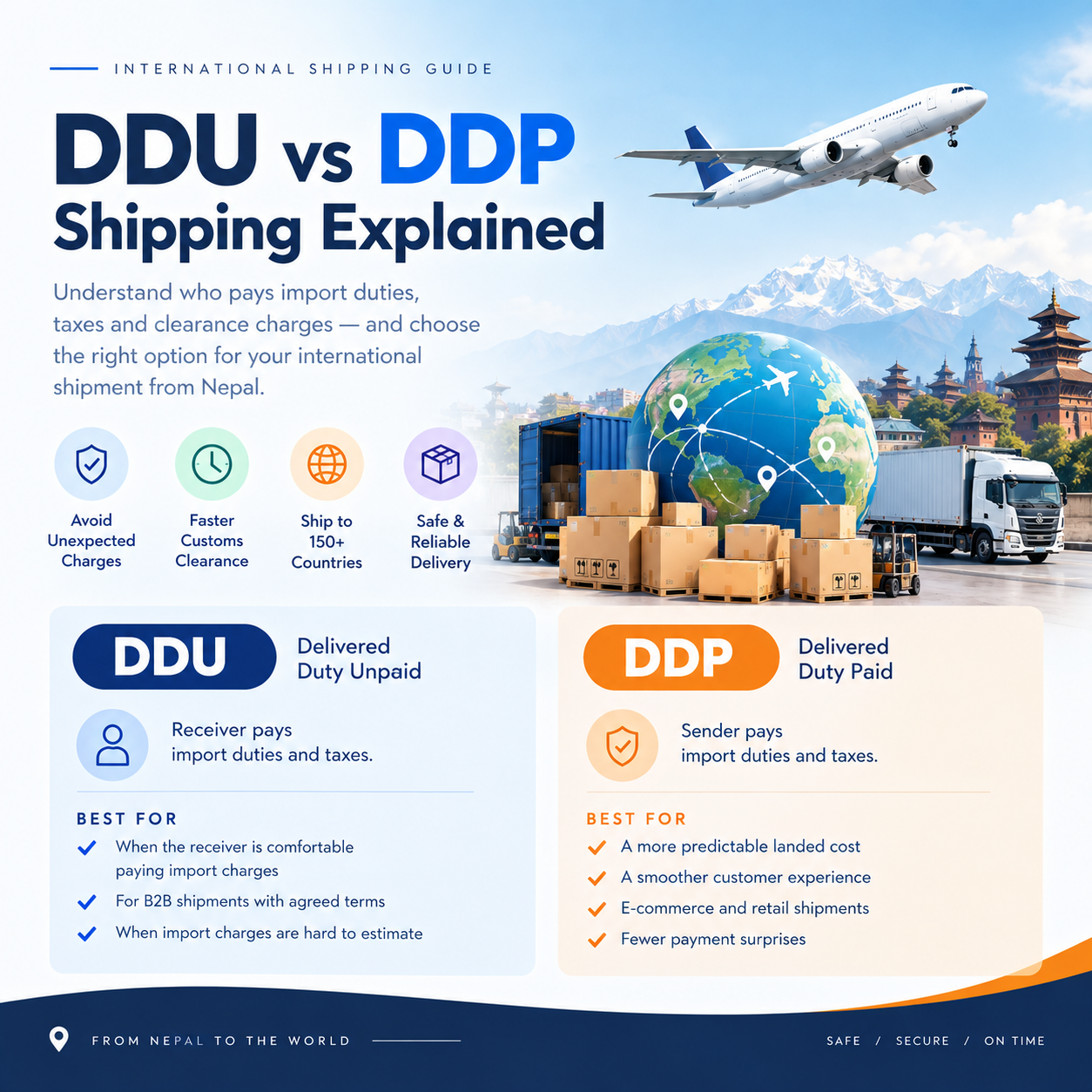


Comments (0)
No comments yet. Be the first to comment!
Leave a Comment